
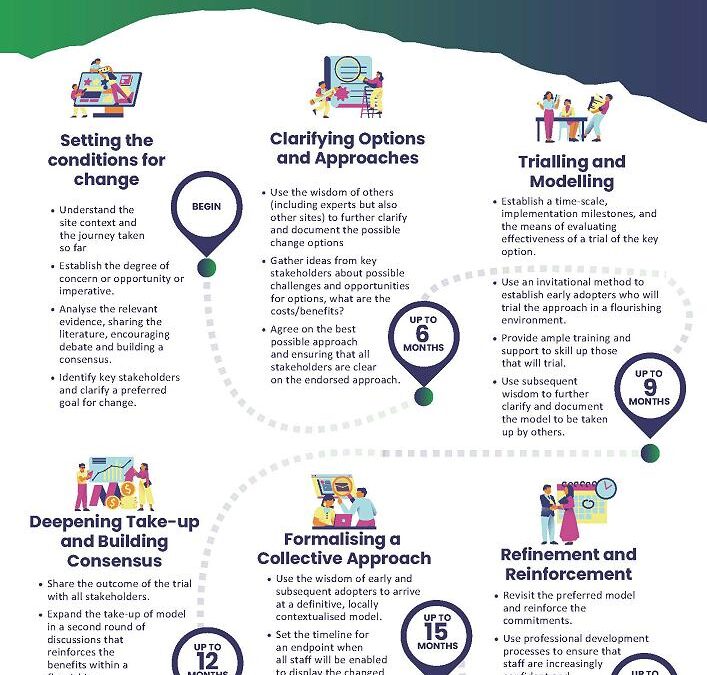
We have created a six-step change leadership process to achieve lasting impact for improved learning outcomes.
Many of us have vivid memories of educational change management processes in schools that have created tension amongst the team or have lost focus and been swamped by a myriad other change initiatives! Indeed, many would say that they have had to suffer the effects of more unsuccessful change processes than those that have hit the mark!
There are a number of reasons for this. Firstly, it can be because those that were responsible for leading the change process didn’t think through the necessary steps to ensure that those who are chiefly responsible for implementing the change have a high degree of ownership over its creation and enactment. Ensuring that a consensus is built among key stakeholders around the imperative for change and its intent, is such an important first step!
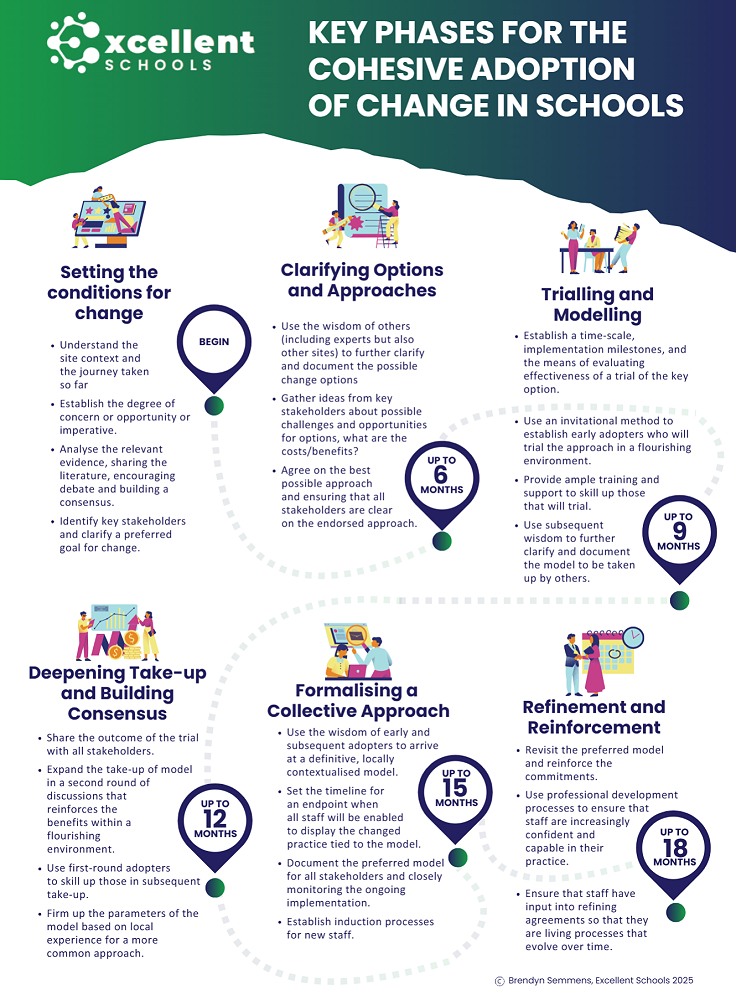
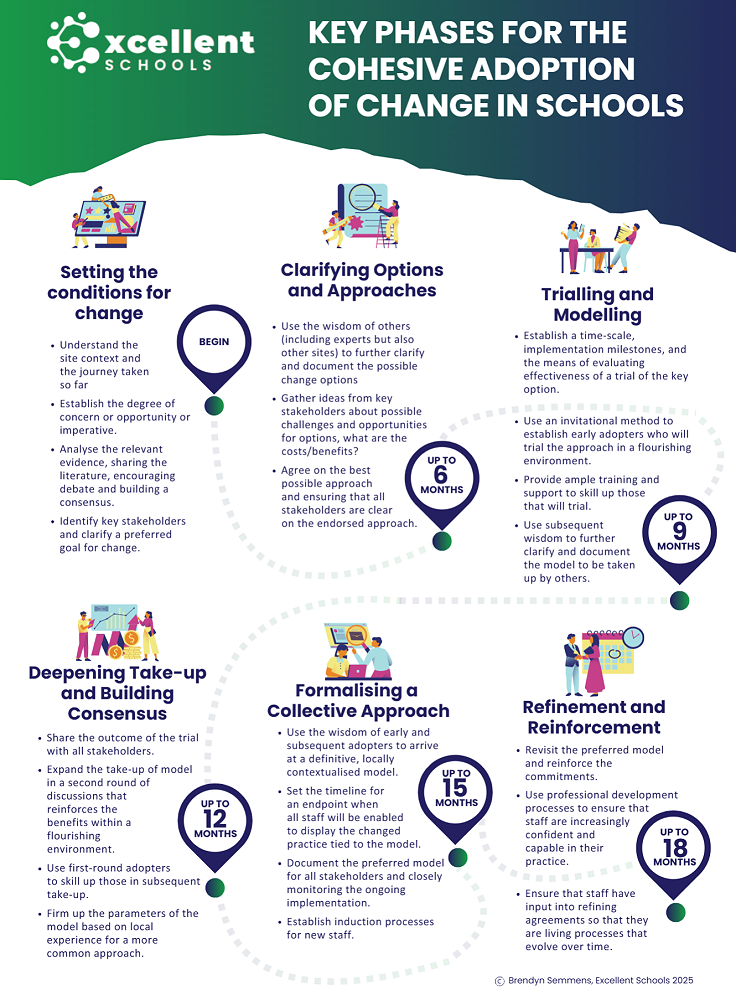
This is the first key element in the Excellent Schools change management process (click on the image) and is vital to its ultimate success. It is crucial to create the opportunity for those who are going to enact the change to have significant input into why it is necessary and what options are available for successful completion.
Secondly, it is often the case that people feel professionally threatened by the implications of a change process for their own practice, mostly because they lack confidence or don’t appreciate the relevance in their context. In either case, any change initiative must ensure that those most confident and capable, the “early adopters”, are supported with time and resources to first master the change in their own practice before spreading the work across to other colleagues.
Our change management model sets out clearly how to use the “early adopters” as the key change ambassadors. By modelling the revised approach in accessible ways and sharing their positive results, this powerful group can ensure that those least confident will “buy-in” and be well supported in their own professional growth.
Lastly, the lament I hear mostly from Principals in this area is that they don’t take the opportunity, once the change of practice is widely though not completely adopted, to formalise the localised collective approach. In other words, they don’t finalise, publish and badge the relevant documents that signify the change and don’t take the opportunity to ensure that the staff recognise that “this is our way of doing things” at the local level. Too often, leaders assume that take-up is high and consistent, where often this is not the case.
The Excellent Schools model not only outlines these steps at embedding change but also how to reinforce the collective agreements in ways that make them future-proof, particularly in schools with large numbers of teachers or high staff turnover. At the same time, it reinforces that induction processes for new staff are clear about the embedded approach and the ways that they will be supported to adopt this.
By following each of the six change management steps, a cohesive change agenda can be achieved which can be embedded over time and ultimately benefit the greatest number of students.




Recent Comments